Blog / Crown Ford Inc Service

From Your Ford Dealer: 5 Signs Your Ford Needs Transmission Repair

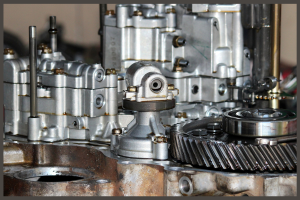
Are you experiencing problems with the transmission in your Ford? If so, it's essential to bring your vehicle in for transmission service as soon as possible. The transmission is an integral part of your car, and if not properly maintained, it can lead to costly repairs or even complete breakdowns. We'll discuss five key signs that your vehicle needs transmission repair from your Ford dealer.

1. The Check Engine Light Is On

One of the most important signs that your Ford needs transmission service is if the check engine light is illuminated on your dashboard. While this could mean several things, this warning light will be the first indication if the transmission is malfunctioning. It is vital to have the check engine light checked out by a certified pro as soon as possible to ensure that your transmission is not in trouble.

2. Your Car Is Slipping Gears

If you experience sudden jerks or vibrations when shifting gears, it's likely an indication that something is wrong. This could be due to a lack of transmission fluid or a mechanical issue with the transmission itself. Additionally, if your car is having difficulty staying in gear, this could also be a sign that it needs repair. To test if this is the case, try accelerating slowly and gently. If you notice the car revving up but not accelerating, it could mean you have a slipping transmission.

3. You Hear Odd Noises

You may notice a whining or humming noise when accelerating, or you may hear clunking, grinding, or even buzzing noises when you shift gears. If you hear any strange noises, it's important to get your vehicle checked out right away. It could indicate that there's something wrong with your transmission and that it needs to be repaired as soon as possible.

4. You're Experiencing Shifting Delays

Delayed shifts can occur while driving or when your car is idling. This can happen when you shift from park to drive or attempt to accelerate. It's essential to have your Ford serviced if you are experiencing any shifting delays, as this could indicate an issue with your transmission that needs to be addressed. An experienced technician will be able to diagnose the problem and recommend the best course of action for getting your vehicle back into good working order.

5. Odd Burning Smells

Worn clutch plates or a malfunctioning bearing or seal could cause burning smells. These parts can create heat, and that can result in burning smells. If you notice any strange odors coming from your car, you must get it checked out as soon as possible. It may be a sign of a serious transmission issue that needs to be addressed. If your Ford displays any of the above signs, it's time to bring your vehicle in for a transmission fix. Keeping your transmission well-maintained is important for ensuring safe and smooth operation. Visit Crown Ford Lynbrook if your Ford needs any repair.
Posted in:

Related Posts

Ford Tire Service in Lynbrook, NY - Crown Ford Inc

Ford Tire Care: Ensuring Safety and Longevity

As the only part of your car in direct contact with the road, your tires are under a great deal of pressure. As such, it's vital to keep them in excellent shape with the Ford tire maintenance guidelines outlined below. With a few routine inspections and services, your tires will last far longer, and you'll also remain much safer on the road. more Check Air Pressure Monthly Tires should never be allowed to become over or under-inflated, which can cause them to lose traction, overheat, or even blow out. At least once a month, use a pressure gauge to check the PSI inside each tire. If the PSI isn't at the exact figure recommended in your owner's manual, release or add air as required. Inspect Your Tires for Damage When checking air pressure, also examine each tire for signs of excessive wear or damage. If you notice any strange bulges, cuts, or embedded objects, have the tire inspected by a trusted technician. Excessive cracks or uneven tire wear could also be a problem. Rotate Your Tires Twice a Year The best solution for uneven wear is to have our tires rotated every six months. During a rotation, our technicians will swap around the tires and also check each one for indications of excessive wear or damage. Check and Correct Tire Alignment Car tires also tend to become misaligned over time, as bumps over potholes gradually push suspension components out of position. So each time you have your tires rotated, it's advisable to have the alignment measured too. If your tires are found to be misaligned, they can be set straight again; the alignment procedure typically takes less than an hour. Balance Your Wheels Too Tires frequently need to be balanced for optimal performance and longevity. Here, the technician uses a specialist weighing machine to find any slightly heavier spots in the tire and then balances things out with carefully applied weights. Have the balance of your tires checked twice a year and rebalanced whenever required. Schedule Professional Ford Tire Maintenance Today While air pressure checks are easy enough to conduct at home, most tire maintenance tasks require specialist tools and know-how. If you arrange a convenient tire servicing schedule with us, we'll courteously remind you whenever it's time for a rotation, alignment, or balancing check. We can also promptly replace worn-out tires. Visit Crown Ford Inc in Lynbrook, NY, today to have your tires and driving returned to full strength, smoothness, and safety. We put customer safety and satisfaction first and foremost in all that we do.

The Essential Ford Maintenance Schedule Performed at Your Ford Dealer: What You Need To Know

It is important to follow the recommended Ford maintenance schedule and have your vehicle serviced at your Ford dealer, where we have the diagnostic tools and certified mechanics who know your vehicle best. Importance of Scheduled Maintenance Your Ford vehicle's scheduled maintenance is spread out every 10,000 miles until you reach 40,000, then every 20,000 miles until you reach 100,000 miles. These maintenance services are critical in keeping your vehicle running as if it's new off the dealer's lot. more 10,000 Miles At the 10,000-mile service, your tires will be inspected and rotated to promote even wear. Your vehicle will receive a complete oil change with an oil filter change, and the cooling system and hoses will be inspected. The exhaust system and heat shields will be examined. The transmission fluid levels will be checked. The brake parts will be inspected for corrosion or lack of surfacing. The steering, suspension joints, and linkage will all be lubricated. At every scheduled maintenance service appointment, your vehicle will also undergo a multi-point inspection, which covers the vehicle overall. 20,000 Miles In addition to the regularly scheduled maintenance, they will also replace the cabin air filter so you are breathing fresh air inside your vehicle. 30,000 Miles In addition to the regularly scheduled maintenance, you will receive a fuel filter change and an engine air filter change. Engine belts and hoses will be examined for loose fits and material integrity. 40,000 Miles In addition to the regularly scheduled maintenance, they will replace the cabin air filter. 60,000 Miles In addition to the regularly scheduled maintenance, your brakes will be replaced, the brake fluid will be checked, and the battery will be tested. The transmission and coolant fluid levels will be topped off or replaced. 90,000 Miles In addition to the regularly scheduled maintenance, they will inspect the timing belt, spark plugs, and the power steering fluid and hoses. 100,000 Miles In addition to the regularly scheduled maintenance, they will inspect your drive belt and examine the front axle lubricant levels. All the fluids will be checked and topped off or replaced as needed. The coolant will be exchanged for a more robust supply. The undercarriage parts, joints, and shafts are inspected and lubricated. Contact Crown Ford, Inc. in Lynbrook, NY, and schedule your next maintenance appointment now.

3 Signs You Need a Radiator Repair at Your Ford Dealer

Combustion generates huge amounts of heat, and sustained high temperatures can damage your engine. Your Ford has a very efficient cooling system to solve this problem, and the capstone of the system is the radiator. It's responsible for removing heat and maintaining a safe engine temperature. If your radiator is damaged, your Ford dealer can fix it for you. These are some signs that you need a radiator repair. Damaged Radiator Tubes The front of the radiator is comprised of rows of thin aluminum tubes. Engine heat is captured by coolant that's pumped through the engine. The coolant then passes into the radiator and enters the tubes, where the heat is removed by air flowing in through the grille. The numerous tubes provide a large area to speed up the heat exchanger process. more These tubes are very light and easily damaged. Hard substances like sand and grit can blow in through the grill and dent them. A dented tube will block the inflow of coolant, and as more tubes are damaged, the radiator's cooling ability will be severely restricted. Lack of cooling due to the damaged tubes can cause your engine to overheat. We can fix this problem by removing the damaged radiator and installing a new one. Coolant Leaks Liquid coolant is vital for the cooling system as it's the only means to transport heat to the radiator for removal. This coolant moves through your engine at high speed, which means any damage to part of the cooling system can result in a coolant leak. Damage to the head gasket, the seal between the upper and lower engine sections, can cause coolant to leak into your exhaust. Coolant is available in bright colors like pink, orange, yellow, and blue, which helps to easily identify a coolant leak. If you notice a leak, we advise contacting us ASAP. Driving with a low coolant level can cause your engine to rapidly overheat. Our technicians will trace and seal the leak, then we'll refill your coolant. Engine Temperature Gauge When you start your engine, the temperature g​​​​​​​​​​​​​​​​auge will rise, and the indicator should hover near the center of the gauge. This happens because the cooling system activates when your engine temperature rises over 180 F. As you're driving, you may notice the gauge rises sharply when you accelerate or if you're towing a heavy load, but it will drop again as the cooling system speeds up to reduce the temperature again. If you see that your temperature is rising steadily for no apparent reason, your radiator could have failed. We'll examine your cooling system to identify the problem and then fix it. We can easily and quickly fix any radiator problem. Call us today at Crown Ford Inc.